
The language of meaningful flowers has been around for centuries. It has shaped literature and daily talks in many places in Europe and Asia.
In William Shakespeare’s works, emotional bouquets were key. They helped share deep feelings and messages between characters. Knowing what each flower means can help us share our feelings better and connect with others.
By looking into the history and cultural differences of flower symbolism, we can appreciate the art of making emotional bouquets more. These bouquets can send our messages clearly.
Key Takeaways
- Discover the historical significance of flower symbolism in literature and culture.
- Learn how to convey complex emotions through meaningful flowers.
- Explore the cultural variations of flower symbolism across Europe and Asia.
- Understand the importance of creating emotional bouquets.
- Gain insights into the practical applications of flower symbolism in everyday communication.
The Ancient Language of Flowers
Flowers have special meanings since ancient times. Different cultures gave flowers their own symbols. This way, flowers could share feelings and messages without words.
Historical Origins of Floral Symbolism
Flowers have been special in ancient Greece, Rome, and Egypt. In these places, flowers were part of myths and rituals. For example, roses meant love in Greece, and lotus flowers meant rebirth in Egypt.
“The language of flowers is a language of love, and it speaks directly to the heart.” –
How Flower Meanings Evolved Across Cultures
When cultures met through trade, flower meanings changed. In Victorian England, flowers were secret messages for lovers. In Japan, the flower language, Hanakotoba, is still used today.
| Culture | Flower | Symbolic Meaning |
|---|---|---|
| Ancient Greece | Rose | Love and Passion |
| Egyptian | Lotus | Rebirth |
| Victorian England | Tulip | Love and Fame |
Knowing how flower meanings changed is key. It helps us understand flower symbols today. By seeing the history and culture behind flowers, we can enjoy their messages more.
How to Use a Flower Symbolism Chart
Flowers have secret meanings that can show deep feelings. A flower symbolism chart helps us understand these meanings. It guides us in picking the right flowers for any event.
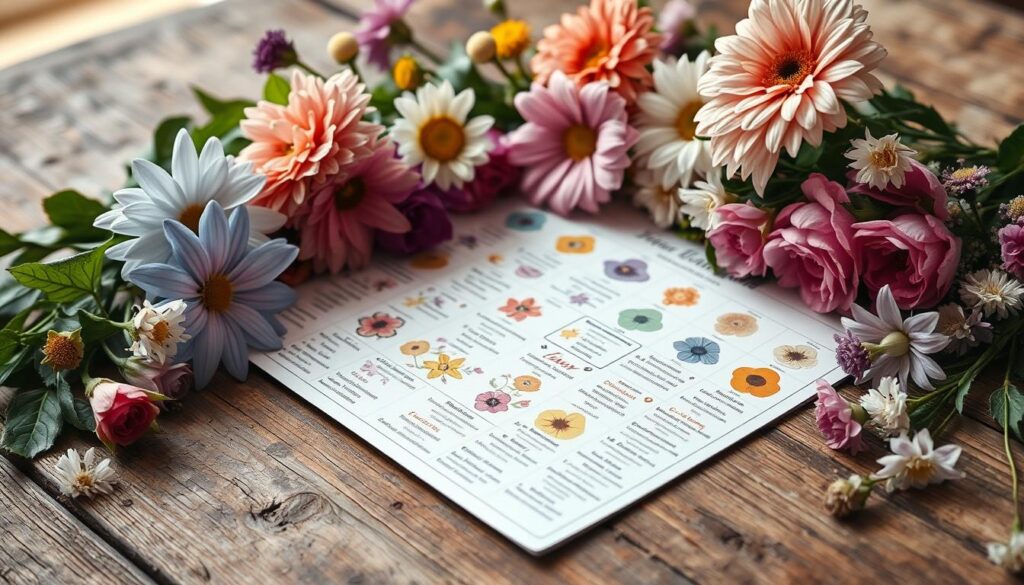
Decoding Floral Meanings for Different Occasions
Each event needs its own special flowers. For example, red roses are perfect for showing love on Valentine’s Day. But, white lilies are better for saying sorry, as they mean purity.
Choosing flowers wisely is all about knowing the event and the people involved. A flower chart helps us pick the right flowers. This way, we send the right message.
| Occasion | Recommended Flowers | Symbolic Meaning |
|---|---|---|
| Anniversary | Red Roses, Pink Tulips | Love, Appreciation |
| Sympathy | White Lilies, White Carnations | Purity, Innocence, Mourning |
| Friendship | Yellow Roses, Sunflowers | Joy, Gratitude |
Factors That Influence a Flower’s Symbolic Message
Many things can change a flower’s meaning. Color, culture, and even how many flowers you give matter. For instance, red tulips show deep love, while yellow tulips bring hope.
“The language of flowers is a language of the heart, and it speaks directly to our emotions.”
Knowing these details helps us make bouquets that truly speak to someone. By using a flower chart, we can create emotional bouquets that touch the heart.
Flowers That Symbolize Love and Romance
Flowers have special meanings in the language of flowers. They show deep feelings and romantic thoughts. This way, they offer a beautiful way to share emotions.
Red Roses: The Ultimate Symbol of Passion
Red roses are the top symbol of love and passion. They show deep feelings and desire. Giving red roses on Valentine’s Day is a classic way to show love.
Red roses send a strong message. Giving them in odd numbers makes the gesture even more special.
Beyond Roses: Tulips, Carnations, and Other Romantic Blooms
Other flowers also show love and affection. Tulips mean different things based on their color. Red tulips mean passionate love, and white tulips mean forgiveness. Carnations, especially in pink and red, show love and appreciation.
- Tulips: Symbolize passionate love (red), forgiveness (white)
- Carnations: Represent love and distinction (red, pink)
- Lilacs: Symbolize first love
Flowers for Different Stages of Relationships
Choosing flowers depends on the relationship stage. Tulips or daffodils are good for new relationships. For long-term relationships, mix roses, lilies, and orchids in anniversary bouquets.
Knowing flower meanings helps pick the right bouquet. It makes the gesture more personal and meaningful.
Flowers That Express Friendship and Appreciation
Flowers are a special way to show feelings. They can say thank you and celebrate with friends. Giving flowers is a kind thing to do.
Yellow Roses, Sunflowers, and Their Connection to Friendship
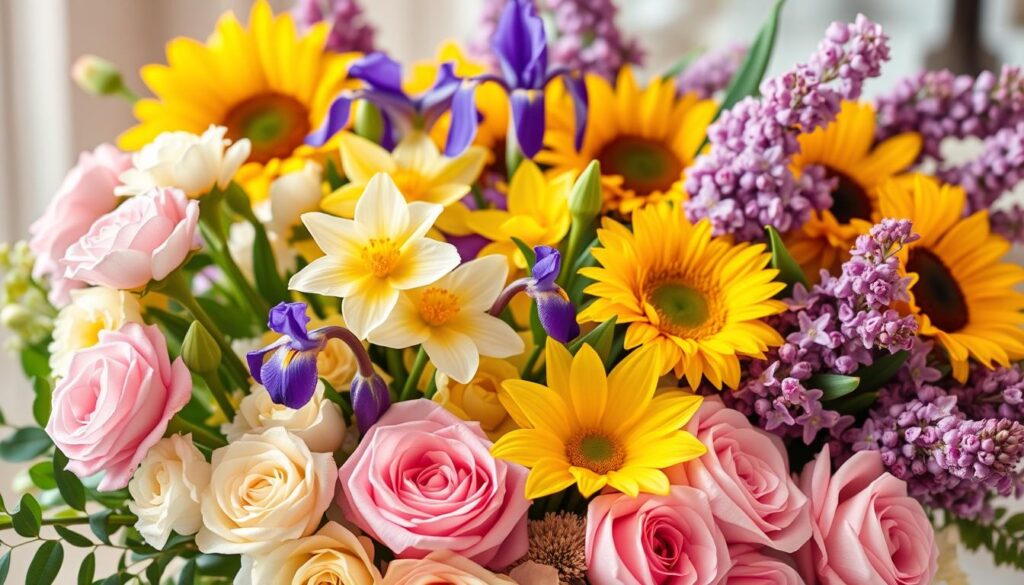
Yellow roses and sunflowers are great for friends. Yellow roses bring joy and happiness. Sunflowers show loyalty and dedication, which are key in friendships.
Daisies, Irises, and Other Blooms That Say “Thank You”
Daisies and irises show thanks and appreciation. Daisies mean innocence and friendly love. Irises stand for faith, hope, and wisdom, perfect for showing deep thanks.
Flowers for Celebrating Achievements and Milestones
Using flowers to celebrate achievements adds a special touch. Orchids and gladioli are great for this. Orchids mean beauty and strength. Gladioli show moral strength and character.
| Flower | Symbolism | Occasion |
|---|---|---|
| Yellow Roses | Joy, Celebration | Friendship |
| Sunflowers | Loyalty, Dedication | Friendship, Appreciation |
| Daisies | Innocence, Friendly Love | Appreciation, Gratitude |
| Irises | Faith, Hope, Wisdom | Appreciation, Gratitude |
Flowers for Sympathy and Remembrance
Flowers are a special way to show sympathy and comfort in hard times. They speak a universal language of condolence. This tradition is loved in many cultures around the world.
Lilies, Chrysanthemums, and Other Traditional Funeral Flowers
Lilies and chrysanthemums are often seen at funerals. Lilies mean purity, innocence, and beauty. They are a favorite for showing sympathy.
Chrysanthemums have different meanings in different places. In some Asian cultures, they mean long life and honor. In others, they show grief and mourning.
Roses, carnations, and orchids are also common at funerals. White roses mean respect and reverence. Carnations show love and remembrance.
Blooms That Symbolize Hope and Healing After Loss
Some flowers mean hope and healing after loss. Daffodils are bright and full of life. They symbolize new starts and renewal. Tulips, especially in soft colors, also mean hope and comfort.
These flowers help those who are grieving. They remind them of beauty and life, even in death.
Cultural Variations in Mourning Flowers Around the World
Flowers for mourning change a lot from culture to culture. In Western cultures, white flowers are common. They mean purity and peace. But in some Asian cultures, bright flowers like chrysanthemums are used to honor the dead.
It’s important to know these differences when choosing flowers for sympathy. This way, the gesture is respectful and meaningful.
Celebratory and Congratulatory Flowers
Flowers have a special way to say “Congratulations!” and celebrate big moments. From graduations to wedding anniversaries, each bloom has its own meaning. Choosing the right flowers is key to sending the right message.
Birth and New Beginnings
Daffodils and cherry blossoms are great for new starts. Daffodils mean renewal and hope. Cherry blossoms show the beauty of new beginnings.
These flowers are perfect for celebrating births or new projects. They mark the start of something special.
Graduation and Achievement Blooms
Orchids and gladioli are great for graduations. Orchids mean elegance and achievement. Gladioli stand for strength and integrity.
These flowers are perfect for bouquets that celebrate hard work and success.
Wedding Anniversary Flowers by Year
For wedding anniversaries, there are special flowers for each year. Red roses are a classic choice for many anniversaries. They symbolize love and passion.
Knowing the traditional flowers for each year helps pick a meaningful bouquet. It honors the couple’s journey together.
Celebratory flowers make any occasion more beautiful. They also share heartfelt feelings. By choosing flowers that match the occasion, you can send congratulations and wishes in a special way.
Seasonal Flower Symbolism
Learning about seasonal flowers can make your bouquets special. Each season has its own flowers with meanings.
Spring Flowers and Their Meanings
Spring is all about new starts. Flowers like tulips, daffodils, and hyacinths show this. Tulips mean love and passion. Daffodils stand for new beginnings and hope. Hyacinths show loyalty and constancy.
- Tulips: Love and passion
- Daffodils: New beginnings and hope
- Hyacinths: Constancy and loyalty
Summer Blooms and Their Symbolism
Summer flowers are bright and lively. Sunflowers are happy and warm. Dahlias are elegant. Zinnias mean friendship and lasting bonds.
Fall and Winter Flowers and Their Representations
In fall and winter, chrysanthemums and poinsettias shine. Chrysanthemums mean long life and honor. Poinsettias bring joy and celebration, especially at holidays.
- Chrysanthemums: Longevity and honor
- Poinsettias: Joy and celebration
Using Seasonal Symbolism in Floral Arrangements and Gifts
Knowing flower meanings lets you make emotional bouquets. Spring flowers say new starts. Summer sunflowers show happiness.
Choosing flowers with meaning makes gifts more thoughtful. It shows you care.
Comprehensive Flower Symbolism Chart by Color
Flowers come in many colors, each with its own meaning. The color of a flower tells us a lot about its message. This guide will help you pick the right flowers for any occasion.

Red and Pink Flowers: Passion, Love, and Affection
Red flowers like roses and tulips show passion and love. They’re perfect for Valentine’s Day and anniversaries. Pink flowers mean appreciation and gratitude. They’re great for saying thanks and admiration.
As
“The language of flowers is a language of love, and red roses are its most eloquent expression.”
Red flowers are a universal symbol of love. They’re deeply rooted in our culture.
White Flowers: Purity, Innocence, and New Beginnings
White flowers like lilies and orchids stand for purity, innocence, and new beginnings. They’re often in wedding bouquets. They also show hope and renewal. White flowers are also used for funerals and memorial services.
- Lilies represent purity and refined beauty.
- Orchids symbolize love, luxury, and beauty.
- Carnations are often used in funeral arrangements.
Yellow and Orange Flowers: Joy, Friendship, and Energy
Yellow and orange flowers like sunflowers and daisies are bright and cheerful. They symbolize joy, friendship, and energy. They’re great for birthdays and graduations. They can also brighten someone’s day when they’re down.
| Flower | Symbolism |
|---|---|
| Sunflowers | Joy, loyalty, and longevity |
| Daisies | Innocence, purity, and new beginnings |
Blue and Purple Flowers: Tranquility, Dignity, and Respect
Blue and purple flowers like forget-me-nots and lavender bring tranquility, dignity, and respect. They help us relax and calm down. They’re also used to show sympathy and condolences. Purple flowers are linked to luxury, creativity, and wisdom.
Knowing the meaning of flowers by color helps us make meaningful arrangements. Whether it’s for love, gratitude, or sympathy, the right color makes a big difference.
Creating Your Own Flower Symbolism Chart for Reference
For those who often give or get flowers, a personal flower chart is very helpful. It’s a quick guide to pick meaningful flowers for any event.
To make a good flower chart, think about a few main categories. These categories make the info easy to find and understand.
Essential Categories to Include in Your Personal Chart
When making your chart, include flower types, meanings, occasions, and seasons. This way, your chart is both useful and detailed.
- Flower Types: List various flowers, including their common and botanical names.
- Symbolic Meanings: Note the symbolic meanings associated with each flower.
- Occasions: Identify the occasions or events for which each flower is most suitable.
- Seasons: Record the seasons during which each flower is available.
Organizing Flowers by Meaning, Occasion, and Season
You can organize your chart in many ways. You can sort flowers alphabetically, by meaning, by occasion, or by season.
| Flower | Symbolic Meaning | Occasion | Season |
|---|---|---|---|
| Roses | Love, Romance | Anniversary, Valentine’s Day | Year-round |
| Tulips | Love, Hope | Spring Celebrations | Spring |
| Dahlias | Commitment, Bonding | Weddings | Summer, Fall |
Digital and Physical Chart Options for Quick Reference
You can make a digital or physical chart, whichever you like. Digital charts are easy to carry on your phone or computer. Physical charts can be printed and hung up for quick use.
As Jane Doe, a florist, once said, “Having a personal flower chart has changed how I choose flowers. It’s not just about picking pretty flowers; it’s about sending the right message.”
“Flowers are the language of the soul, and knowing their symbolism can make our connections deeper.”
By making your own flower chart, you can give and receive flowers with more meaning and significance.
Designing Meaningful Bouquets with Symbolic Flowers
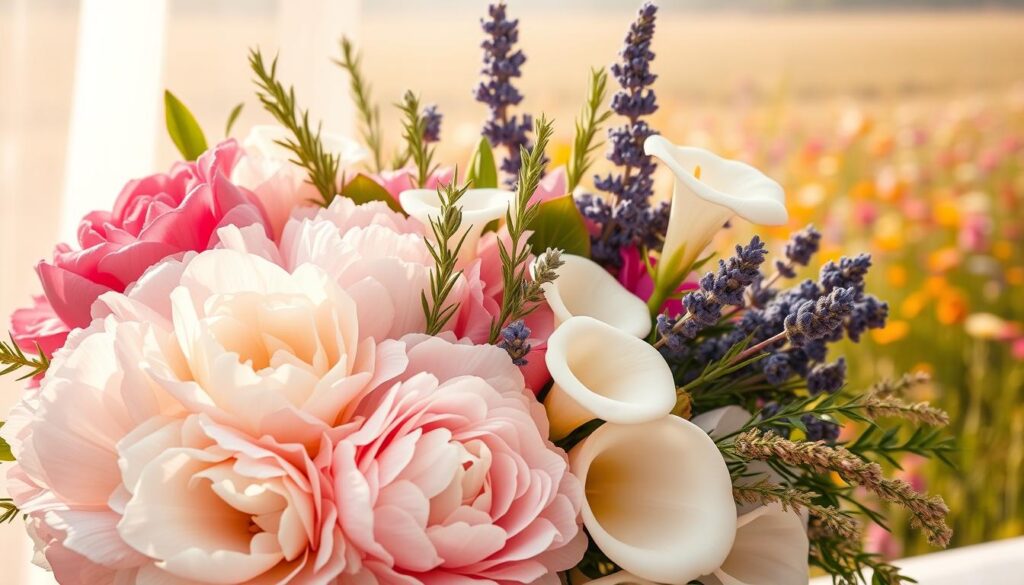
The art of making bouquets is about picking flowers with special meanings. Knowing the language of flowers helps make emotional bouquets. These bouquets can send deep messages and touch the heart of the person who gets them.
Selecting Flowers Based on Their Symbolic Meaning
First, pick flowers that mean what you want to say. For example, red roses mean love and passion. White lilies mean purity and innocence. Choosing the right flowers makes your bouquet speak directly to the heart.
| Flower | Symbolic Meaning |
|---|---|
| Red Roses | Love, Passion |
| White Lilies | Purity, Innocence |
| Sunflowers | Joy, Friendship |
Combining Different Flowers for Complex Messages
Mixing different flowers lets you send more complex messages. For instance, tulips and daffodils together mean love and new starts. Choosing and mixing flowers carefully makes your floral arrangements both meaningful and lovely.
Presentation Tips for Maximum Emotional Impact
How you present a bouquet matters a lot. Think about the wrapping’s color and feel, adding greenery, and the arrangement itself. For example, a personal note or small keepsake can make it even more touching.
By picking flowers wisely, mixing them well, and paying attention to how you present them, you can make meaningful flowers arrangements. These arrangements can share your message and touch the heart of the person who receives them.
Cultural Variations in Flower Symbolism
Flower symbolism changes a lot from one culture to another. This shows how complex and varied human experiences and cultures can be.
When you give flowers, knowing the cultural meanings is key. Different cultures see the same flower in different ways. This is why it’s important to know these differences when sending flowers to other countries.
Eastern Flower Symbolism
In places like Japan and China, flowers carry deep symbolic meanings. Japan’s Hanakotoba is a special flower language. It uses different blooms to share feelings and messages.
In China, flowers are linked to virtues and moral values. Knowing these meanings can make your flower gifts even more special.
Western Interpretations of Floral Meanings
Western cultures, especially in the Victorian era, had their own flower language. This way, people could send secret messages with flowers. Certain flowers meant specific feelings or messages.
Today, we still see the Victorian flower meanings. For example, red roses mean love and passion. But, meanings can differ in Western cultures. It’s important to know the local meanings.
Navigating Cultural Differences
When sending flowers to another country, research the flower meanings in that culture. This helps avoid misunderstandings and makes sure your gift is appreciated as you intend.
By understanding these cultural differences, we can enjoy the rich meanings of flowers from around the world. This shows respect and appreciation for the diverse ways flowers are seen and valued.
Common Mistakes to Avoid in Flower Symbolism
Flower symbolism is a complex language. It can send different messages based on culture, occasion, and personal ties. Misunderstanding flower meanings can send the wrong message. So, it’s key to know about flower symbolism.
Inappropriate Flowers for Specific Occasions and Relationships
Choosing the right flowers is very important. For example, red roses are for love, not friendship. White lilies are for funerals, not parties. Knowing these meanings helps send the right message.
Think about the person’s likes and culture when picking flowers. What’s lovely in one culture might be wrong in another. Some flowers mean mourning or bad luck in certain places.
Cultural Faux Pas with Floral Gifts and How to Avoid Them
Culture affects flower meanings a lot. Chrysanthemums mean loyalty in Asia but mourning in the West. Knowing these differences is key to avoid offense.
Research the flower’s meaning in the recipient’s culture before giving a gift. This is especially true in international or multicultural settings.
Misinterpreting Flower Numbers, Colors, and Arrangement Styles
The number, color, and style of flowers matter a lot. Odd numbers are often seen as more pleasing in many cultures. But, colors and meanings vary across cultures.
Pay attention to these details to make your bouquet mean what you want. The way you present and wrap the bouquet also adds to the message.
Conclusion
The language of flowers is very rich and complex. It helps us express our feelings better and connect with others. By knowing about flower symbolism, we can send messages with flowers.
Emotional bouquets are special because they use flowers to show feelings. They can express love, thanks, or even sympathy. The right flowers can say a lot without words.
Exploring flower symbolism helps us choose the right flowers for different times and people. This way, we make sure our gifts are understood as we mean them. It’s all about making our floral messages clear and heartfelt.